
Understanding Disability and Inclusion in Luxembourg
A disability is not merely a medical condition; it results from the interaction between a person and an environment that is not always accessible. In Luxembourg, 14.6% of the population—more than 94,000 people—report having a disability (STATEC, 2021 census). This page lays the groundwork: what we’re talking about, who is affected, and the framework within which Luxembourg is taking action.

What is a disability?

A disability isn't just about the body or health. It's when the environment isn't adapted to the person.
According to the United Nations Convention on the Rights of Persons with Disabilities, disability results from the interaction between long-term physical, mental, intellectual, or sensory impairments and barriers that limit participation in society. In other words, it is often the environment that creates the situation of disability, rather than the impairment itself.
From the medical model to the social model
For a long time, disability was viewed as an individual problem that needed to be “fixed”—this is the medical model. The United Nations Convention has established a different approach: the social model. This shift in perspective is profoundly transforming public policy: instead of asking people to adapt, it is up to society to remove barriers. This approach guides inclusion policies in Luxembourg, as well as this portal.
-

Medical Model
"The problem is the chair."
The person has to adapt,
take care of themselves, and make up for it. If they don't fit in, that's their problem. -

Social Model
"The problem is the staircase."
The environment adapts: ramp, plain text, captions. The barrier disappears, and participation becomes possible.
From Exclusion to Inclusion: Four Ways to Organize Society.
In an inclusive society, the environment welcomes everyone, with no group set apart.
-

Exclusion -

Separation -
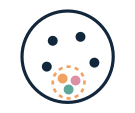
Integration -

Inclusion
The Major Categories of Disabilities
There are many types of disabilities. Some are visible. Many are not.
The term “disability” encompasses a wide range of situations, each of which requires a different response:
-
Physical disability
Impairments in mobility, motor function, or dexterity, ranging from reduced mobility to paralysis.
3.9% of the population reports limited mobility
-

Sensory disability
Vision or hearing impairments, ranging from low vision to blindness, and from hearing loss to deafness.
Viewing: 8.9% · Listening: 2.5%
-

Intellectual disability
Impaired cognitive functions: comprehension, learning, and independence. Hence the importance of the Easy Read.
-

Mental disability
Long-term mental health conditions (severe depression, bipolar disorder, schizophrenia, etc.) that affect a person’s social and professional life.
-

Social disability
A situation of disadvantage or exclusion resulting from relational, behavioral, or adaptive difficulties.
-

Neurodevelopmental Disorders
Autism, learning disabilities, ADHD. Often invisible, these conditions require adapted environments, such as quiet hours.
-

Chronic and Disabling Diseases
Certain long-term medical conditions constitute disabilities as defined by law.
Invisible Disabilities: Common Yet Little-Known
Many disabilities are not visible: sensory, intellectual, mental, and social disabilities; neurodevelopmental disorders; chronic and disabling illnesses… This is one of the reasons behind MiFa’s awareness campaigns: we cannot include what we do not understand. Before judging a parking space as “misused” or behavior as “strange,” let’s remember that a disability isn’t limited to what we can see.
What is inclusion?
Inclusion is when society adapts so that everyone can participate. It is not up to the individual to adapt on their own.
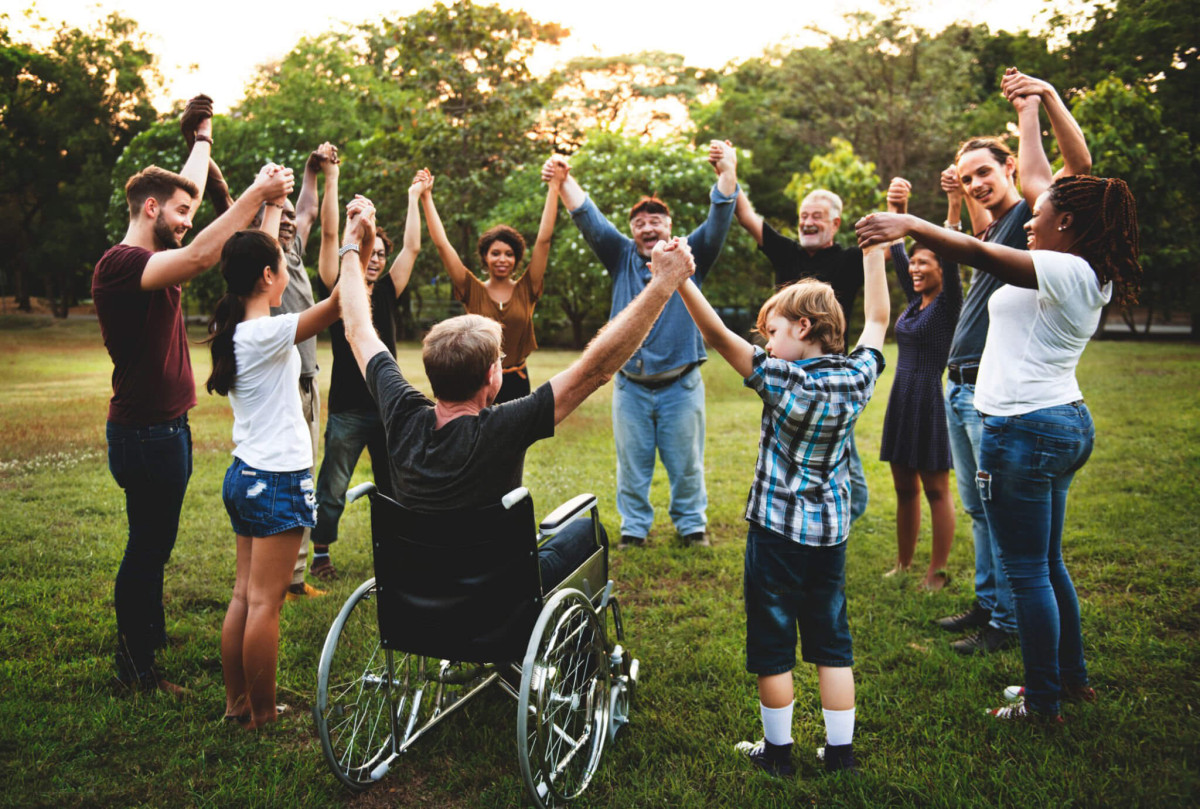
Inclusion goes beyond integration. It is not about asking people to adapt to society, but about adapting society so that everyone can participate in it: at school, at work, in leisure activities, and in public spaces. This is the message behind the campaigns led by MiFa and the central theme of this portal.
In practical terms, inclusion happens everywhere: a store that offers “quiet hours,” a website that’s compatible with screen readers, a school that welcomes all students, an employer that adapts a job or an event to include sign language interpretation. None of these actions is exceptional; together, they build a more inclusive society.
Disability by the Numbers
Some key figures to gauge the reality of disability in Luxembourg (sourced data, to be confirmed by MiFa):
-
14,6 %
of the population reports having a disability
STATEC, RP2021
-
94 000+
affected individuals
STATEC, RP2021
-
4 463
people with disabled employee status as of the end of 2023
Ministry of Labor
-
200+
services approved by the
MIFA
The Most Common Limitations
- View 8.7%
- Limited mobility 3.9%
- Hearing 2.5%
Reported prevalence: 6.4% mild disability · 4% moderate · 2.9% severe (STATEC, RP2021). The third national action plan, adopted by the Government Council on October 2, 2026, includes 50 objectives and 119 concrete actions.
Within what framework does Luxembourg operate?
Luxembourg's efforts fall within a two-pronged framework: internationally, through the United Nations Convention on the Rights of Persons with Disabilities (CRPD), and nationally, through Luxembourg's legislation and national action plan.
-
 What the Law Says
The Legal Framework
Key laws and your everyday rights, explained in plain language.

-
 Learn about the action plan
The CRDPH Action Plan
Luxembourg's Roadmap for Implementing the UN Convention.
Frequently Asked Questions
Frequently Asked Questions
Answers to the most frequently asked questions about the directory of approved services.